
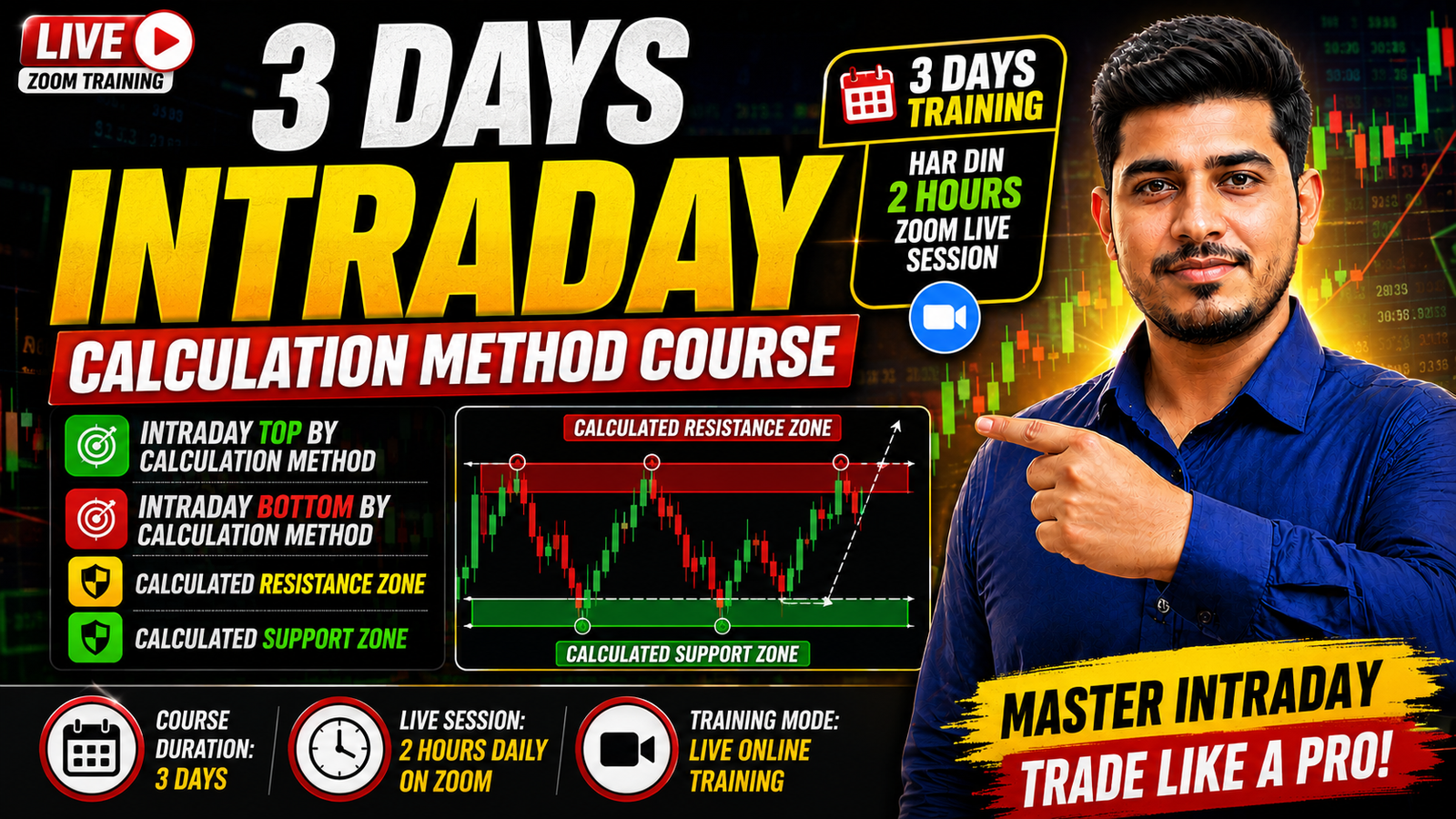
Master Calculation-Based Intraday Trading with Option Chain Analysis
Course Duration: 3 Days Live Training
Training Mode: Live Zoom Sessions
Session Duration: 2 Hours Daily
Total Training Hours: 6 Hours
Course Overview
Most traders lose money in the stock market because they enter trades without a structured plan. While many market participants make decisions based on emotions, professional traders rely on calculations, probability, and market data.
Strategy Class Volume 1 is designed to teach a systematic and calculation-based approach for identifying important intraday market levels. The course focuses on calculating Intraday Top, Intraday Bottom, Support Zones, and Resistance Zones using Option Chain analysis and market positioning.
This training program is suitable for traders who want to improve their market understanding and develop a disciplined trading approach based on data rather than emotions.
What You Will Learn
✅ Intraday Top Calculation Method
✅ Intraday Bottom Calculation Method
✅ Calculated Resistance Zones
✅ Calculated Support Zones
✅ Option Chain Data Reading
✅ Open Interest Analysis
✅ Change in Open Interest Analysis
✅ Market Structure Understanding
✅ High Probability Trading Zones
✅ Real-Time Market Application
Intraday Top by Option Chain Calculation Method
What is an Intraday Top?
An Intraday Top is a price zone where the probability of further upside movement may decrease and sellers may become active.
Using Option Chain Data, traders can identify areas where institutions and large market participants have built significant positions.
Topics Covered
- Open Interest Mapping
- Highest Open Interest Strike Identification
- Call Writing Analysis
- Fresh Call Writer Positioning
- Change in Open Interest Analysis
- Real-Time Market Positioning
- Practical Market Applications
What You Will Learn
- Intraday Target Zones
- Profit Booking Areas
- Reversal Probability Zones
- High-Risk Buying Areas
- Resistance Projection
- Potential Top Calculation Using Option Chain Data
Intraday Bottom by Option Chain Calculation Method
What is an Intraday Bottom?
An Intraday Bottom is a price zone where the probability of further downside movement may decrease and buyers may become active.
Through Put Option Data and Open Interest Analysis, traders can identify support areas where the market may find buying interest.
Topics Covered
- Put Writing Analysis
- Highest Put Open Interest Identification
- Bottom Zone Calculation
- Change in Put Open Interest Analysis
- Institutional Positioning Study
- Real-Time Market Analysis
What You Will Learn
- Potential Bottom Zones
- Support Identification
- Reversal Areas
- Downside Risk Assessment
- High Probability Buying Zones
Calculated Resistance Zone
Understanding Resistance Calculation
A Resistance Zone is an area where selling pressure may increase and upward movement may slow down.
Topics Covered
- Resistance Calculation Framework
- Option Chain-Based Resistance Analysis
- Multiple Resistance Layer Identification
- Breakout Probability Assessment
- Risk-to-Reward Planning
Benefits
- Better Trade Planning
- Early Resistance Identification
- Improved Profit Booking Decisions
- Enhanced Risk Management
Calculated Support Zone
Understanding Support Calculation
A Support Zone is an area where buying activity may increase and the market may find support.
Topics Covered
- Support Calculation Method
- Strong vs Weak Support Analysis
- Option Chain-Based Support Mapping
- Breakdown Probability Assessment
- Trade Planning Around Support Levels
Benefits
- Better Entry Planning
- Strong Support Identification
- Risk Control Framework
- Improved Trade Accuracy
3-Day Live Training Structure
Day 1 – Intraday Top Calculation
- Open Interest Mapping
- Call Writing Analysis
- Top Identification Framework
- Live Market Examples
Day 2 – Intraday Bottom Calculation
- Put Writing Analysis
- Bottom Identification
- Support Zone Framework
- Real-Time Market Examples
Day 3 – Support & Resistance Calculation
- Support Zone Analysis
- Resistance Zone Analysis
- Market Structure Understanding
- Live Demonstration & Q&A Session
Course Benefits
1. Learn a calculation-based approach to identify Intraday Top and Bottom zones before the market reaches them, improving trade planning and confidence.
2. Understand how to analyze Option Chain Open Interest data to identify high-probability Support and Resistance zones for intraday trading.
3. Reduce emotional trading by following a structured framework based on calculations, market positioning, and probability.
4. Discover potential profit-booking, reversal, and breakout areas in advance to improve risk management and trade execution.
5. Gain practical knowledge through live Zoom sessions, real-market examples, and hands-on market analysis.
6. Develop a disciplined trading process that helps identify important market levels daily and improves trading consistency.
Who Should Join This Course?
- Beginners in Trading
- Intraday Traders
- Option Traders
- Commodity Traders
- Traders Looking for a Calculation-Based Strategy
- Market Participants Seeking Structured Trading Methods
Frequently Asked Questions (FAQ)
Is this course suitable for beginners?
Yes. The course is designed for both beginners and intermediate traders. Concepts are explained in a simple and practical manner.
How long is the course?
The training program consists of 3 days of live Zoom sessions, with 2 hours of training each day.
Will live market examples be covered?
Yes. Real-time market examples and practical applications will be discussed throughout the training.
Will buy/sell calls or trading tips be provided?
No. This course is strictly educational and focuses on calculation methods, market analysis, and trading frameworks.
What will I learn after completing this course?
You will learn how to calculate Intraday Top, Intraday Bottom, Support Zones, Resistance Zones, and identify important market levels using Option Chain analysis.
Important Disclaimer
This course is strictly for educational purposes only. No buy/sell recommendations, investment advice, portfolio management services, or profit guarantees are provided. Trading and investing in financial markets involve risk. Participants are solely responsible for their own trading decisions