

AI Is Rewriting the Billionaire Leaderboard
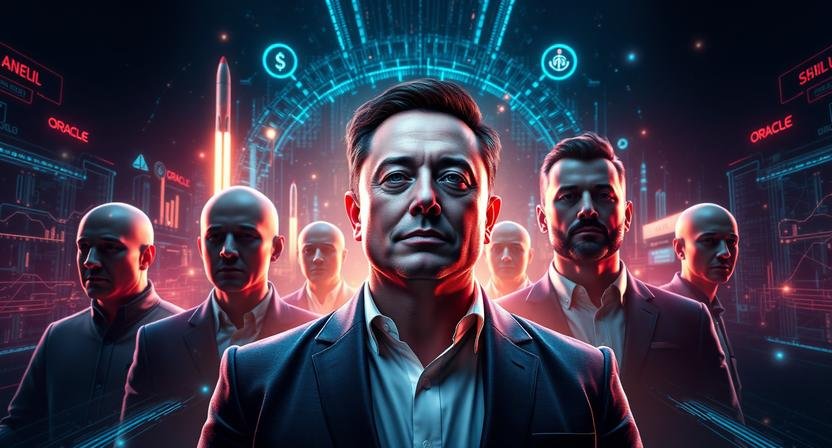
The global artificial intelligence boom is no longer just transforming industries World’s Richest People, it is fundamentally reshaping personal fortunes at the very top of the wealth pyramid. As AI-related stocks, private valuations, and infrastructure investments surged, the rankings of the world’s richest people experienced notable shifts in 2025.
While many familiar names still dominate the list, the forces behind their rising or falling net worths have changed dramatically. From private space ventures and AI-driven advertising to cloud computing and enterprise software, technology—and AI in particular—has become the single most powerful driver of billionaire wealth.
As we move into 2026, the latest data highlights one clear message: those most exposed to AI ecosystems are pulling further ahead.
Elon Musk Remains the World’s Richest Person
At the very top of the rankings, Elon Musk continues to hold the title of the world’s richest individual—by a wide margin.
According to the Bloomberg Billionaires Index, Musk’s net worth has surged to approximately $623 billion, a level never before reached by any individual. The primary driver behind this extraordinary increase is not Tesla alone, but the explosive valuation growth of SpaceX.
SpaceX is now valued at an estimated $800 billion, making it one of the most valuable private companies in the world. Musk owns more than 40% of the company, meaning every increase in SpaceX’s valuation directly and significantly boosts his personal wealth.
While Tesla’s stock has gained around 12% so far this year, its contribution to Musk’s fortune has been secondary compared to SpaceX. Investors increasingly view Musk’s empire through the lens of advanced technology platforms—space, AI-driven autonomy, robotics, and next-generation infrastructure.
Google Founders Surge Ahead on AI Optimism
One of the biggest shifts in the billionaire rankings comes from the founders of Google, as artificial intelligence optimism lifted Alphabet shares sharply in 2025.
Larry Page Moves Into Second Place
Larry Page climbed into the number two spot, finishing 2025 with a net worth of approximately $270 billion. This marks a dramatic rise from seventh place in 2024.
Alphabet shares surged more than 60% during the year, driven by strong confidence in the company’s AI strategy. Investors increasingly see Google as a “triple threat” in artificial intelligence:
- Proprietary large language models
- Massive cloud infrastructure
- AI-powered consumer and enterprise applications
Page’s ownership stake of roughly 6% in Alphabet means he directly benefited from the market’s renewed enthusiasm for AI-driven growth.
Sergey Brin Follows Close Behind
Sergey Brin, Google’s co-founder, also enjoyed a strong jump in rankings. He finished 2025 as the fourth wealthiest person in the world, with a net worth of approximately $251 billion.
Brin rose six places year-over-year, underscoring how concentrated ownership in AI-driven companies can rapidly change personal fortunes. Together, Page and Brin’s combined stake in Alphabet continues to act as a powerful wealth engine.
ALSO READ: Top Investment Stocks to Watch in 2026 AI, Turnarounds, Metals Selective Opportunities
Jeff Bezos Slips as Amazon Underperforms
Jeff Bezos began the year as the world’s second richest person, but by the end of 2025, he had slipped to third place.
Bezos’ net worth stands at around $255 billion, primarily tied to his ownership of just over 8% of Amazon. While Amazon remains one of the most dominant global companies, its stock gained less than 6% in 2025, significantly underperforming the broader market and many AI-focused peers.
This relative underperformance highlights a key theme emerging in the billionaire rankings:
Traditional e-commerce and logistics growth is no longer enough to compete with AI-led valuation expansion.
While Amazon continues to invest heavily in cloud and AI infrastructure, investors have rewarded companies with clearer AI monetization narratives more aggressively.
Larry Ellison’s Volatile Ride at Oracle
Rounding out the top five is Oracle founder Larry Ellison, whose net worth experienced significant volatility throughout 2025.
Ellison still owns approximately 40% of Oracle, making his personal wealth highly sensitive to the company’s stock price movements. Oracle shares swung sharply during the year and ended up roughly 40% below their September peak.
As a result, Ellison fell from the world’s second richest person just months ago to fifth place by year-end.
Beyond Oracle’s stock performance, Ellison’s wealth has also been tied to a high-profile potential media acquisition. He has reportedly backed his son’s bid for Warner Bros. Discovery, guaranteeing more than $40 billion in financing. This move adds another layer of complexity—and risk—to his financial profile.
Other Familiar Names in the Top 10
The rest of the top ten remains populated by well-known figures from technology and finance, reflecting the continued dominance of tech-driven wealth creation.
Notable names include:
- Mark Zuckerberg, benefiting from Meta’s renewed AI focus
- Steve Ballmer, whose Microsoft stake continues to compound
- Jensen Huang, riding the AI semiconductor wave
- Warren Buffett, representing traditional long-term investing discipline
While their relative positions may shift, the common thread is clear: exposure to AI infrastructure, platforms, or ecosystems remains a critical advantage.
ALSO READ: Nvidia at CES 2026: AI Leadership, Chip Innovation and the Next Phase of the Semiconductor Boom
Why AI Is the Defining Wealth Driver of This Era
The reshuffling of billionaire rankings is not random. It reflects deeper structural changes in how value is created in the global economy.
Artificial intelligence is driving:
- Massive capital investment in data centers and chips
- Explosive demand for cloud and compute infrastructure
- New monetization models across advertising, enterprise software, and automation
Those with ownership stakes in companies positioned at the center of this transformation are seeing outsized gains, while others face relative stagnation.
Importantly, private company valuations—such as SpaceX—are now playing a much larger role in personal wealth calculations, adding another layer of upside for founders with concentrated ownership.
What the Rankings Signal for Investors in 2026
For investors, the billionaire leaderboard offers valuable insight into broader market trends:
- AI remains the dominant long-term investment theme
- Ownership concentration matters more than ever
- Private valuations can rival or exceed public markets
- Traditional business models face increasing valuation pressure
As 2026 unfolds, markets are likely to remain volatile, but the structural demand for AI-related technology shows no sign of slowing.
Conclusion: The AI Era Is Creating a New Wealth Hierarchy
The world’s richest people list in 2026 tells a powerful story. While the names at the top may look familiar, the forces driving their fortunes have evolved rapidly.
Elon Musk’s dominance reflects the power of private AI-driven platforms. The rise of Google’s founders highlights how deeply AI is reshaping digital ecosystems. Meanwhile, relative declines among others show that even giants must adapt quickly to stay competitive.
As artificial intelligence continues to redefine industries, it is also redefining who sits at the very top of global wealth—and how fast those positions can change.
Frequently Asked Questions (FAQs)
1. Who is the world’s richest person in 2026?
Elon Musk remains the world’s richest person in 2026, driven mainly by the soaring valuation of SpaceX and gains in Tesla.
2. Why did Elon Musk’s net worth increase so sharply?
Musk’s wealth surged primarily due to SpaceX’s valuation jumping to around $800 billion, where he owns over 40%.
3. How did artificial intelligence impact billionaire rankings?
AI-driven stock rallies and private company valuations significantly boosted the wealth of tech founders connected to AI infrastructure and platforms.
4. Why did Larry Page move ahead of Jeff Bezos?
Larry Page benefited from Alphabet’s strong AI-driven stock rally, which pushed Google shares over 60% higher during the year.
5. What role does Google’s AI business play in its founders’ wealth?
Google’s AI models, cloud services, and AI-powered advertising strengthened investor confidence, lifting both Larry Page’s and Sergey Brin’s net worth.
6. Why did Jeff Bezos slip in the rankings despite Amazon’s size?
Amazon shares underperformed the broader market in 2025, limiting Bezos’ wealth growth compared to AI-focused peers.
7. What caused Larry Ellison’s ranking to fall?
Oracle’s stock declined nearly 40% from its peak, reducing Ellison’s net worth despite his large ownership stake.
8. Are private companies now more important than public stocks for billionaire wealth?
Yes, private company valuations like SpaceX are increasingly playing a major role in shaping billionaire fortunes.
9. Which industries are creating the most new wealth in 2026?
Artificial intelligence, cloud computing, semiconductors, space technology, and automation are the biggest wealth generators.
10. What can investors learn from billionaire wealth rankings?
The rankings highlight where long-term capital is flowing—toward AI infrastructure, scalable platforms, and future-focused technology ecosystems.

Hi, I am the creator of MrTellMare.com—a passionate Stock Market learner and Technical Analysis enthusiast. My goal is to help traders understand Price Action, Market Structure, and Intraday Strategies in a simple and practical way. I share educational content on Equity, Index, Futures, Commodity and Crypto markets for informational and learning purposes only. I believe trading is a skill, and with the right knowledge and discipline, anyone can grow in financial markets.