
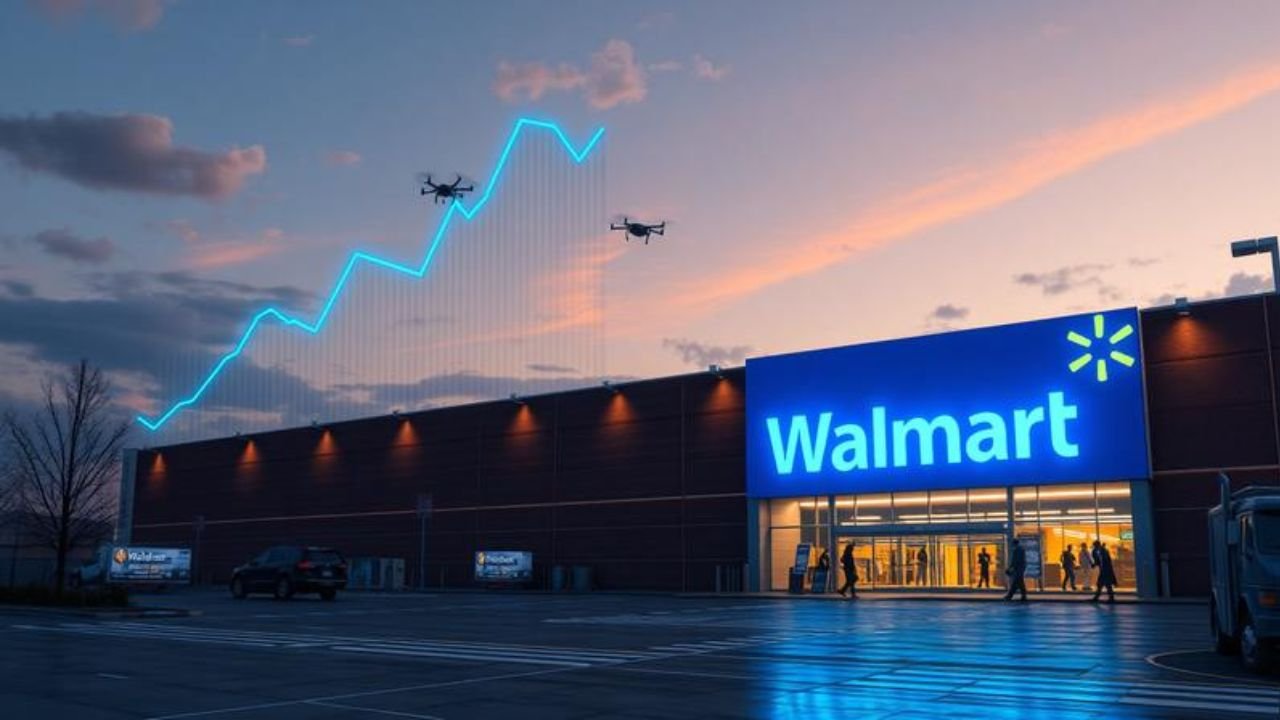
Introduction: Walmart’s Historic $1 Trillion Valuation Moment
Walmart has officially entered the elite trillion-dollar club, marking a historic milestone for the world’s largest retailer.World’s Largest Retailer As Walmart’s market capitalization crossed $1 trillion, it joined an exclusive group of companies that have reshaped global commerce, technology, and consumer behavior.
This achievement comes at a pivotal moment for the company, coinciding with a new CEO transition and years of strategic transformation. Once seen primarily as a brick-and-mortar giant, Walmart has successfully reinvented itself as a technology-powered omnichannel retailer, capable of competing head-to-head with Amazon.
In this article, we break down how Walmart reached a $1 trillion market cap, what drove its stock higher, how it compares to rivals like Amazon and Target, and what investors should watch next.
Walmart Market Cap Crosses $1 Trillion: Why It Matters
Why a $1 Trillion Valuation Is a Big Deal
Reaching a $1 trillion market capitalization is not just a symbolic achievement—it signals investor confidence in a company’s long-term growth, profitability, and strategic vision.
For context:
- Amazon market cap: ~$2.56 trillion
- Target market cap: ~$48 billion
- Walmart market cap: Now over $1 trillion
This gap highlights how Walmart has evolved beyond traditional retail and positioned itself as a tech-enabled commerce powerhouse.
READ ALSO: How Smart Sleep Technology Is Redefining Health, Productivity, and Longevity
The Leadership Shift: New CEO, New Era for Walmart
Walmart’s trillion-dollar milestone arrives just as John Furner steps into his role as CEO. He inherits a company already on strong footing—but with massive opportunities ahead.
The Doug McMillon Legacy
Former CEO Doug McMillon, who led Walmart for over a decade, laid the foundation for this valuation surge. Under his leadership, Walmart:
- Transitioned from a store-only model to omnichannel retail
- Invested heavily in e-commerce and logistics
- Leveraged its massive store footprint for faster delivery
McMillon’s strategy helped Walmart achieve consistent same-store sales growth, even during periods of economic uncertainty.
Walmart vs Amazon: How Walmart Learned to Compete Online
For years, Amazon dominated the conversation around e-commerce. Walmart, once viewed as lagging behind, quietly built a system that now rivals Amazon’s reach.
Faster Delivery Through Physical Stores
One of Walmart’s biggest advantages is its physical store network:
- Walmart can reach 93–95% of U.S. households
- Stores double as fulfillment and distribution centers
- Faster last-mile delivery at lower costs
This hybrid model allows Walmart to offer same-day and next-day delivery without relying solely on warehouses.
E-Commerce Growth: The Engine Behind Walmart’s Valuation
Same-Store Sales and Online Expansion
Over the past decade, Walmart has posted:
- Low to mid single-digit same-store sales growth
- Occasional high single-digit growth during peak demand cycles
E-commerce has been a key driver, with:
- Online grocery pickup
- Subscription-based Walmart+ services
- Marketplace expansion for third-party sellers
This shift helped Walmart attract higher-income consumers, a trend accelerated after the pandemic.
The K-Shaped Economy: Why Walmart Is Winning Right Now
The current economy is often described as K-shaped, where:
- Higher-income consumers continue spending
- Lower-income households remain price-sensitive
Walmart thrives in both segments.
Why High-Income Shoppers Are Choosing Walmart
Post-pandemic, Walmart saw an influx of:
- Affluent consumers seeking value
- Shoppers looking for convenience and fast delivery
Walmart’s low-price model combined with premium online services created a powerful value proposition.
Walmart’s Technology Push: AI, Automation, and Innovation
To maintain momentum, Walmart is heavily investing in technology and artificial intelligence.
Key Tech Initiatives at Walmart
Walmart’s tech roadmap includes:
- AI-powered inventory management
- Personalized online shopping experiences
- Automation in warehouses
- Data-driven demand forecasting
These investments are aimed at reducing costs while improving customer experience.
Drone Delivery and the Future of Walmart Logistics
One of Walmart’s most ambitious initiatives is drone delivery.
Why Drone Delivery Matters
Drone delivery allows Walmart to:
- Reduce delivery times
- Cut last-mile logistics costs
- Serve suburban and rural areas efficiently
As consumers increasingly expect near-instant fulfillment, drone delivery could become a major competitive advantage.
Walmart’s Nasdaq Relisting: A Strategic Signal
In December, Walmart relisted on the Nasdaq, a move seen as symbolic and strategic.
What the Nasdaq Relisting Means
The relisting signals:
- Walmart’s commitment to being viewed as a technology-forward company
- Greater visibility among growth-focused investors
- Alignment with innovation-driven peers
This shift reinforces Walmart’s identity beyond traditional retail.
Walmart Stock Performance: What Investors Should Watch
Key Growth Drivers Going Forward
If you’re invested in Walmart—or considering it—here’s what to monitor:
- E-commerce profitability
- Marketplace expansion
- AI-driven efficiency gains
- Walmart+ subscription growth
- Competition with Amazon
While Amazon remains larger, Walmart’s diversified revenue streams provide stability.
READ ALSO: Choosing the Right Business Structure: What Every Small Business Owner Should Know
Walmart vs Target: A Tale of Two Retailers
Target, once considered Walmart’s closest competitor, has struggled by comparison.
Why Walmart Pulled Ahead
Key differences include:
- Walmart’s focus on essentials
- Superior logistics network
- Broader price appeal
Target’s smaller scale and narrower focus left it more exposed to economic volatility.
Consumer Convenience: The Heart of Walmart’s Strategy
Today’s shoppers want:
- Fast delivery
- Low prices
- Easy returns
- Seamless online and offline experiences
Walmart’s strategy centers on meeting consumers wherever they are, whether online, in-store, or via mobile apps.
Challenges Ahead: What Could Slow Walmart’s Growth?
Despite its success, Walmart faces risks:
- Margin pressure from delivery costs
- Intense competition from Amazon
- Rising labor and technology expenses
- Regulatory and data privacy concerns
Execution will be critical as Walmart scales its tech investments.
Walmart’s Global Opportunity
While much of Walmart’s valuation growth comes from the U.S., international markets remain an opportunity:
- E-commerce in emerging markets
- Digital payments
- Supply chain optimization
Global expansion could be a long-term catalyst.
What’s Next for Walmart After $1 Trillion?
Crossing $1 trillion is not the finish line—it’s the beginning of a new chapter.
Walmart’s future depends on:
- How well it leverages AI
- Its ability to out-innovate Amazon
- Continued dominance in value retail
- Sustaining customer loyalty
If executed correctly, Walmart could push even further into tech-driven commerce leadership.
Conclusion: Walmart’s Trillion-Dollar Transformation Story
Walmart’s journey to a $1 trillion market cap is a case study in strategic reinvention. By embracing e-commerce, leveraging its massive store footprint, investing in technology, and staying true to its low-price promise, Walmart has rewritten its narrative.
From brick-and-mortar giant to omnichannel titan, Walmart has proven that legacy retailers can adapt—and thrive—in the digital age.
ALSO READ :Wall Street Faces a Reality Check as Tech Stocks Slide, AI Spending Comes Under Scrutiny

Hi, I am the creator of MrTellMare.com—a passionate Stock Market learner and Technical Analysis enthusiast. My goal is to help traders understand Price Action, Market Structure, and Intraday Strategies in a simple and practical way. I share educational content on Equity, Index, Futures, Commodity and Crypto markets for informational and learning purposes only. I believe trading is a skill, and with the right knowledge and discipline, anyone can grow in financial markets.