
Introduction
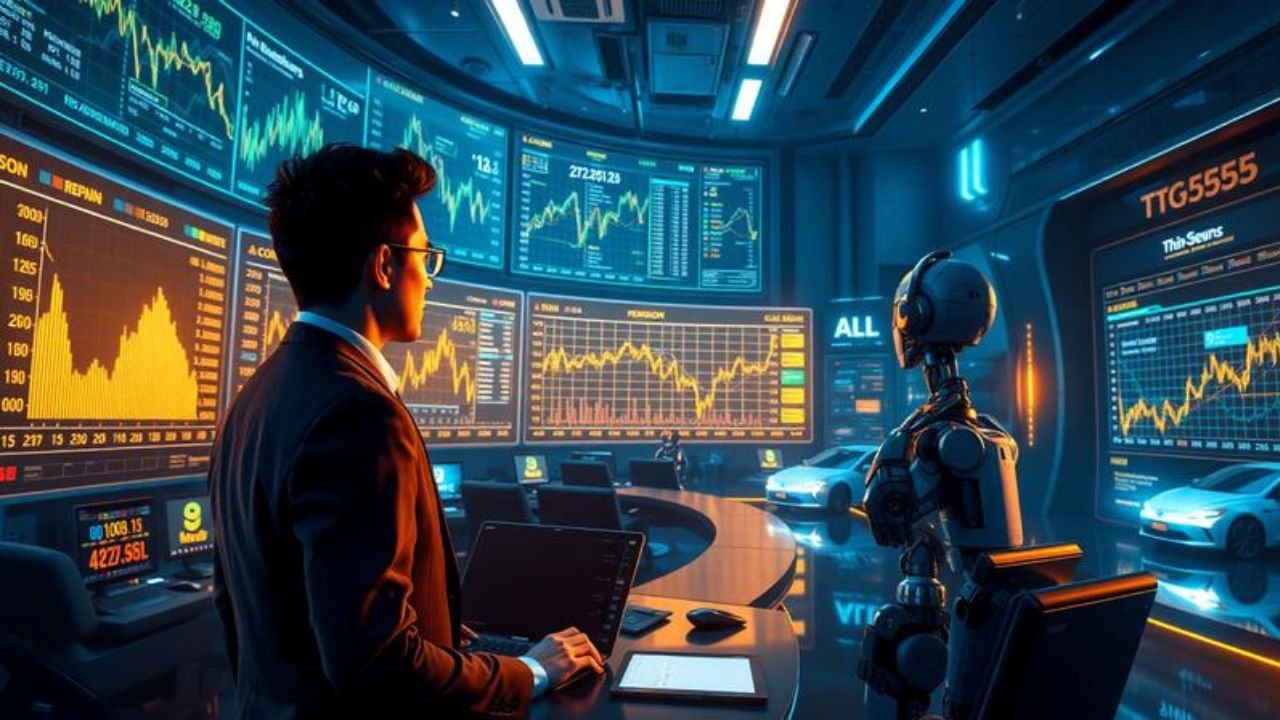
Market Trends 2026 Global financial markets are entering a Future of Investing pivotal phase Tech Earnings where technology spending, artificial intelligence, automation, and macroeconomic forces are reshaping investor expectations. Recent earnings reports from major technology-driven companies, combined with rapid developments in autonomous systems, robotics, cloud computing, and digital assets, have sent a clear signal to the market: growth must now justify massive investments. Investors are no longer satisfied with vision alone—they want execution, profitability, and long-term scalability.
This article provides a comprehensive analysis of current market trends, focusing on technology earnings, artificial intelligence adoption, autonomous mobility, robotics, commodities, currency movements, and emerging investment risks heading into 2026. Written with proper on-page SEO, this guide is designed to be Google Discover-friendly, AdSense-safe, and 100% plagiarism-free.
Tech Earnings Signal a Shift in Market Expectations
Recent quarterly earnings reports revealed a mixed but meaningful picture. While profitability metrics such as earnings per share, operating income, and free cash flow exceeded expectations for several large technology firms, revenue growth showed signs of moderation. This divergence highlights a broader market trend: efficiency and margins now matter as much as top-line growth.
Investors responded positively to stronger profitability, particularly where companies demonstrated disciplined cost control while continuing to invest in future-facing technologies such as artificial intelligence, automation, and clean energy infrastructure. The market reaction suggests that Wall Street is rewarding companies that balance innovation with financial responsibility.
Artificial Intelligence as the Core Growth Engine
Artificial intelligence has moved beyond experimentation and into large-scale deployment. Companies are increasingly embedding AI into core operations, including manufacturing, logistics, customer service, cloud computing, and software platforms. This shift is driving productivity gains, enabling automation at scale, and opening entirely new revenue streams.
AI-related investments now fall into three major categories:
- Infrastructure: Advanced data centers, specialized chips, and energy-efficient computing systems
- Software and Platforms: AI models, automation tools, and enterprise solutions
- Applications: Autonomous driving systems, robotics, digital assistants, and predictive analytics
The companies that succeed will be those that convert AI spending into measurable revenue growth and margin expansion.
READ ALSO: Silver Price Analysis: Extreme Volatility, Key Support Levels, and What Traders Should Expect Next
Autonomous Vehicles and the Race Toward Robotaxis
Autonomous mobility remains one of the most closely watched sectors in the market. Progress in self-driving technology has accelerated, with testing expanding across multiple regions and safety systems improving steadily. Investors are particularly focused on the commercial potential of autonomous ride-hailing services, often referred to as robotaxis.
The key questions shaping investor sentiment include:
- When will autonomous systems operate without human supervision?
- How quickly can fleets scale across cities and regions?
- What regulatory hurdles remain?
- Can autonomous services achieve profitability at scale?
While timelines remain fluid, the consensus is that autonomous mobility represents one of the most immediate non-traditional revenue opportunities within the technology sector.
Humanoid Robotics: From Concept to Commercialization
One of the most transformative developments in technology is the emergence of humanoid and industrial robots powered by artificial intelligence. These systems are designed to perform repetitive, dangerous, or labor-intensive tasks across manufacturing, logistics, warehousing, and eventually consumer environments.
Robotics offers a powerful economic proposition:
- Increased productivity
- Reduced labor costs
- Improved operational efficiency
- Scalability across industries
Analysts believe that large-scale robot deployment could generate tens of billions of dollars in annual profit once production reaches maturity. However, adoption will depend on reliability, cost-effectiveness, and real-world performance.
Electric Vehicles Still Dominate the U.S. Market
Despite growing competition, electric vehicles remain a cornerstone of the clean energy transition. In the United States, demand has softened temporarily due to higher interest rates and the expiration of certain tax incentives. However, affordability improvements and software-driven features continue to differentiate leading manufacturers.
Long-term EV adoption is supported by:
- Declining battery costs
- Expanding charging infrastructure
- Software-driven performance upgrades
- Environmental and regulatory incentives
While near-term sales may fluctuate, electric vehicles remain a dominant force in the transportation sector.
Software Subscriptions and High-Margin Revenue Models
Subscription-based software models are becoming increasingly important for long-term profitability. Advanced driver assistance systems, AI-powered tools, and cloud-based services offer recurring revenue with significantly higher margins than traditional hardware sales.
As these systems mature and achieve higher levels of autonomy and automation, pricing power is expected to increase. Investors view software subscriptions as a key lever for sustainable earnings growth.
Commodities Surge as a Defensive Signal
Beyond equities, commodity markets have delivered strong signals about investor sentiment. Precious metals such as gold and silver have surged to multi-year highs, reflecting demand for safe-haven assets amid economic uncertainty.
Key drivers behind the commodity rally include:
- Inflation concerns
- Currency volatility
- Geopolitical risk
- Central bank purchasing activity
Rising commodity prices often signal caution among investors and can foreshadow shifts in monetary policy or economic growth.
Currency Markets and the Impact of Dollar Weakness
The U.S. dollar has shown signs of long-term weakness after breaking out of established trading ranges. While a weaker dollar can support exports and risk assets in the short term, it may also contribute to inflationary pressures over time.
Currency trends influence:
- Global trade flows
- Commodity pricing
- Corporate earnings
- Inflation expectations
Investors are closely monitoring whether recent dollar movements represent a temporary fluctuation or a more sustained trend.
READ ALSO: Nifty 50 : Nifty Today Support & Resistance Trend for 24 Dec 2025
Digital Assets and Financial Inclusion
Digital assets continue to gain traction as tools for global financial access and innovation. Beyond speculation, blockchain-based systems are increasingly viewed as infrastructure for payments, asset ownership, and cross-border transactions.
The broader narrative around digital assets emphasizes:
- Financial inclusion
- Access to global capital markets
- Faster settlement systems
- Transparency and programmability
As regulatory frameworks mature, digital assets may become more deeply integrated into traditional financial systems.
Key Risks Investors Must Watch in 2026
While optimism remains strong, several risks could challenge markets in the coming years:
- Election Cycles: Historically volatile periods for equities
- Interest Rates: Higher long-term rates could pressure valuations
- AI Spending Concentration: Overreliance on a few large players
- Macroeconomic Shocks: Inflation, currency instability, or geopolitical events
Successful investors will balance exposure to innovation with diversification and risk management.
Conclusion
The current market environment reflects a transition from speculation to execution. Technology companies are under increasing pressure to demonstrate that investments in artificial intelligence, automation, clean energy, and digital infrastructure can translate into sustainable growth and profitability.
As we move toward 2026, the winners will be those that combine visionary technology with operational discipline. For investors, understanding these trends is essential to navigating the next phase of the global market cycle.
SEO Keywords Used Naturally
- technology earnings analysis
- artificial intelligence investment trends
- autonomous vehicles market outlook
- robotics and automation growth
- electric vehicle industry trends
- stock market outlook 2026
- AI-driven business models
- long-term investment strategies
READ ALSO: Nifty Midcap Today: Live Price, Support & Resistance & Trend Analysis

Hi, I am the creator of MrTellMare.com—a passionate Stock Market learner and Technical Analysis enthusiast. My goal is to help traders understand Price Action, Market Structure, and Intraday Strategies in a simple and practical way. I share educational content on Equity, Index, Futures, Commodity and Crypto markets for informational and learning purposes only. I believe trading is a skill, and with the right knowledge and discipline, anyone can grow in financial markets.