
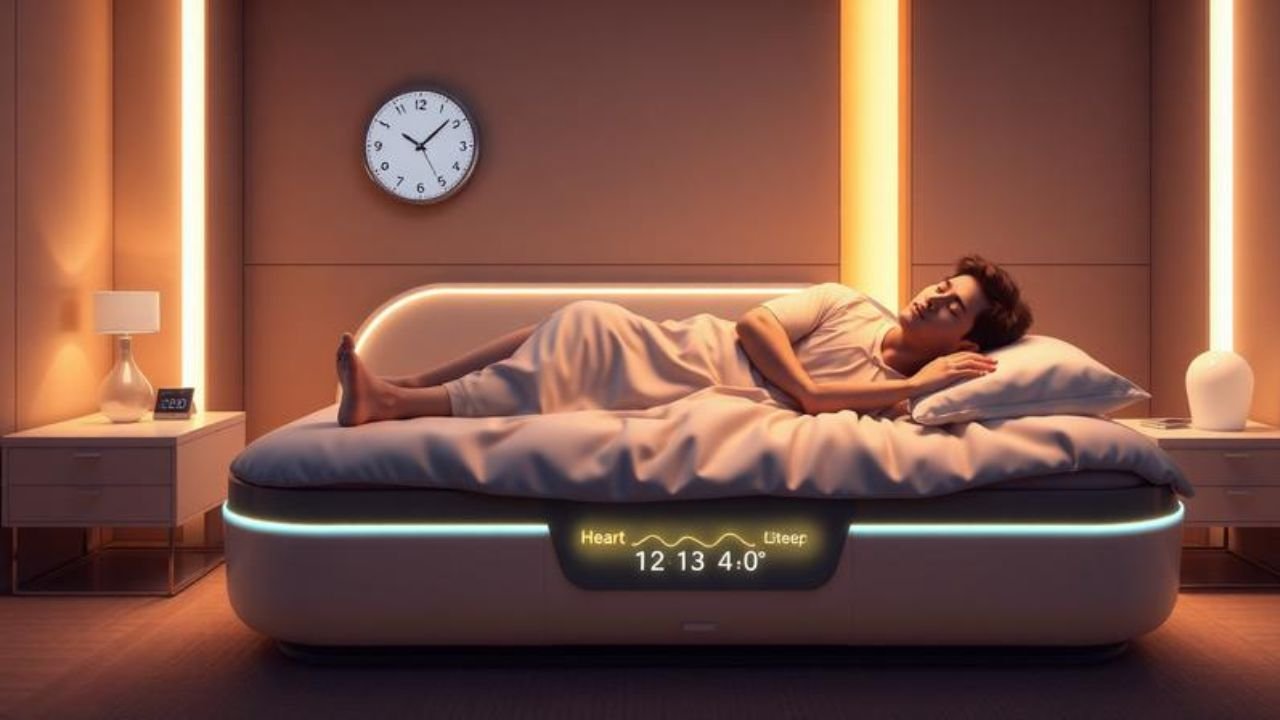
In today’s always-on world, Smart Sleep Technology has quietly become one of the most undervalued assets in modern life.Redefining Health Professionals pride themselves on long work hours, late nights, and early mornings, often wearing sleep deprivation as a badge of honor. Yet, behind the scenes, a growing movement is challenging this mindset—one that treats sleep not as downtime, but as a powerful performance tool.
At the center of this shift is a new generation of entrepreneurs and technologists who believe sleep is fundamentally broken—and fixable.
Why Sleep Needed a Rethink
For decades, the basic idea of sleep remained unchanged. People went to bed on static mattresses, adjusted the thermostat once, and hoped to wake up refreshed. Despite massive advances in medicine, nutrition, and fitness, sleep technology lagged behind.
The contradiction became obvious: humans spend nearly one-third of their lives asleep, yet most sleep environments remain passive and unintelligent. If someone expects optimized performance from their diet and exercise routine, why should sleep—the foundation of health—be left to chance?
This question sparked a broader realization: sleep quality isn’t just about hours spent in bed. It is influenced by temperature, heart rate, breathing patterns, stress levels, and daily habits. Ignoring these variables can lead to poor recovery, reduced focus, and long-term health risks.
READ ALSO: Finnifty Support & Resistance Today | Finnifty Intraday Trend & Technical Analysis
The Hidden Role of Temperature in Sleep Quality
One of the most misunderstood elements of sleep is temperature regulation. Research and real-world data consistently show that body temperature plays a critical role in falling asleep and staying asleep.
This becomes especially apparent in shared sleeping environments. Studies reveal that a large majority of couples disagree on ideal sleep temperature. One partner prefers warmth, while the other sleeps better in cooler conditions. These nightly compromises often lead to fragmented sleep for both.
Beyond comfort, temperature directly affects sleep cycles. Proper cooling supports deeper sleep stages, while overheating can cause frequent awakenings. Despite this, traditional mattresses offer no dynamic temperature control—forcing sleepers to rely on blankets, fans, or air conditioning that affect the entire room rather than the individual.
From Passive Beds to Intelligent Sleep Systems
Modern sleep technology is shifting the bed from a passive object into an active health system. Advanced sleep setups now collect thousands of data points each night, monitoring heart rate, respiratory patterns, movement, and temperature changes.
Using artificial intelligence, these systems adjust conditions in real time—sometimes thousands of times per night—to optimize sleep without requiring user input. Instead of manually tweaking settings, sleepers simply go to bed while algorithms handle the rest.
Over time, this data builds personalized sleep profiles that become increasingly accurate. The result is not just better rest, but measurable improvements in recovery, mental clarity, and daytime performance.
Sleep as the Foundation of Performance
Athletes have long understood the importance of sleep for recovery, but this mindset is spreading to business leaders, executives, and high-pressure professionals. Cognitive performance, emotional regulation, and decision-making all depend heavily on sleep quality.
Poor sleep increases cravings for unhealthy food, reduces motivation to exercise, and impairs concentration. In contrast, consistent, high-quality sleep enhances focus, resilience, and long-term productivity.
This realization is driving a cultural shift. Sleep deprivation is increasingly viewed as a health risk rather than a sign of dedication. Experts now compare chronic sleep loss to smoking—once normalized, now widely recognized as dangerous.
Artificial Intelligence and the Future of Sleep Optimization
The most transformative force in sleep technology is artificial intelligence. By analyzing massive datasets, AI systems can detect subtle patterns humans would miss. These insights allow sleep environments to adapt dynamically to individual needs.
For example, AI can identify early signs of sleep disturbances, irregular breathing, or cardiovascular stress. Over time, it can predict trends and recommend lifestyle changes that improve long-term health outcomes.
Some innovators describe this approach as creating a “digital twin”—a virtual model of a person’s health that simulates future outcomes based on current habits. Each night of sleep adds more data, making predictions increasingly precise.
READ ALSO: Sensex Support & Resistance Today | Sensex Intraday Trend & Technical Analysis
From Better Sleep to Preventive Healthcare
Perhaps the most profound implication of smart sleep technology is its potential role in preventive healthcare. Sleep data offers early warning signs for serious conditions, including cardiovascular issues and sleep-related breathing disorders.
Instead of waiting for symptoms to escalate, sleep systems could alert users to seek medical guidance early. This proactive approach has the potential to save lives by detecting risks before they become emergencies.
As regulatory approvals progress, sleep technology is moving closer to medical-grade applications. This could transform the bedroom into one of the most important health monitoring environments in daily life.
Hardware vs. Software: Where Innovation Is Heading
While hardware improvements continue—such as better sensors, quieter systems, and more intuitive controls—the biggest breakthroughs are expected in software.
Future sleep platforms are likely to function like always-on health assistants, offering personalized guidance based on years of accumulated data. Imagine receiving daily recommendations on sleep timing, stress management, or recovery strategies—powered by AI trained on millions of nights of sleep.
Hardware provides the foundation, but software delivers the intelligence that makes personalization possible.
Data Privacy and Trust
With increased data collection comes increased responsibility. Sleep data is deeply personal, revealing not just habits but long-term health trends. Protecting this information is essential to maintaining user trust.
Leading sleep technology companies emphasize strict data security standards, encryption, and transparency. As the industry grows, data ethics will become just as important as innovation.
Consumers are increasingly aware of how their data is used, and trust will play a major role in determining which platforms succeed.
The Business of Sleep Technology
The sleep industry has evolved from selling mattresses to offering integrated ecosystems that combine hardware, software, and recurring digital services. This model provides stability and long-term growth potential.
As companies mature, industry consolidation is likely. Some players will grow independently and potentially enter public markets, while others may merge to expand capabilities. Analysts expect only a few dominant platforms to emerge as global leaders.
Public market interest reflects growing recognition that sleep is not a niche category—it is central to health, productivity, and longevity.
Building a Company Around an Underestimated Problem
One of the most striking lessons from the sleep technology space is the importance of being both contrarian and correct. When early innovators entered the market, sleep was not considered a priority. Many dismissed these products as luxury items rather than health tools.
Over time, scientific evidence and user outcomes validated the original thesis. What once seemed excessive is now viewed as essential. This pattern is common in breakthrough industries: the biggest opportunities often appear unimportant until they suddenly become unavoidable.
What a Perfect Night of Sleep Looks Like
Despite advanced technology, the fundamentals remain simple. A high-quality night of sleep typically lasts seven to nine hours, with healthy proportions of deep and REM sleep and minimal interruptions.
Technology doesn’t replace good habits—it enhances them. Consistent sleep schedules, stress management, and balanced nutrition remain critical. Smart systems simply help people get more value from the time they already spend in bed.
Looking Ahead: The Next Decade of Sleep Innovation
The future of sleep technology extends beyond the bedroom. As health devices become more integrated, sleep data may eventually connect directly with healthcare providers, enabling more informed and timely interventions.
Longer term, emerging fields such as neural interfaces could redefine how sleep and recovery are managed altogether. While these ideas may sound futuristic today, history suggests that foundational shifts often begin at the edges of possibility.
What is clear is this: sleep is no longer passive. It is becoming personalized, intelligent, and central to how people think about health and longevity.
Final Thoughts
Sleep was once treated as an afterthought—a necessary pause between productive hours. Today, it is increasingly recognized as the engine behind peak performance and long-term well-being.
As technology continues to evolve, the question is no longer whether sleep optimization matters, but how effectively individuals choose to invest in it. In a world obsessed with doing more, better sleep may be the most powerful advantage of all.
READ ALSO: Natural Gas Support & Resistance Today | Intraday Trend & Technical Analysis

Hi, I am the creator of MrTellMare.com—a passionate Stock Market learner and Technical Analysis enthusiast. My goal is to help traders understand Price Action, Market Structure, and Intraday Strategies in a simple and practical way. I share educational content on Equity, Index, Futures, Commodity and Crypto markets for informational and learning purposes only. I believe trading is a skill, and with the right knowledge and discipline, anyone can grow in financial markets.