
Last updated on January 20th, 2026 at 02:05 pm
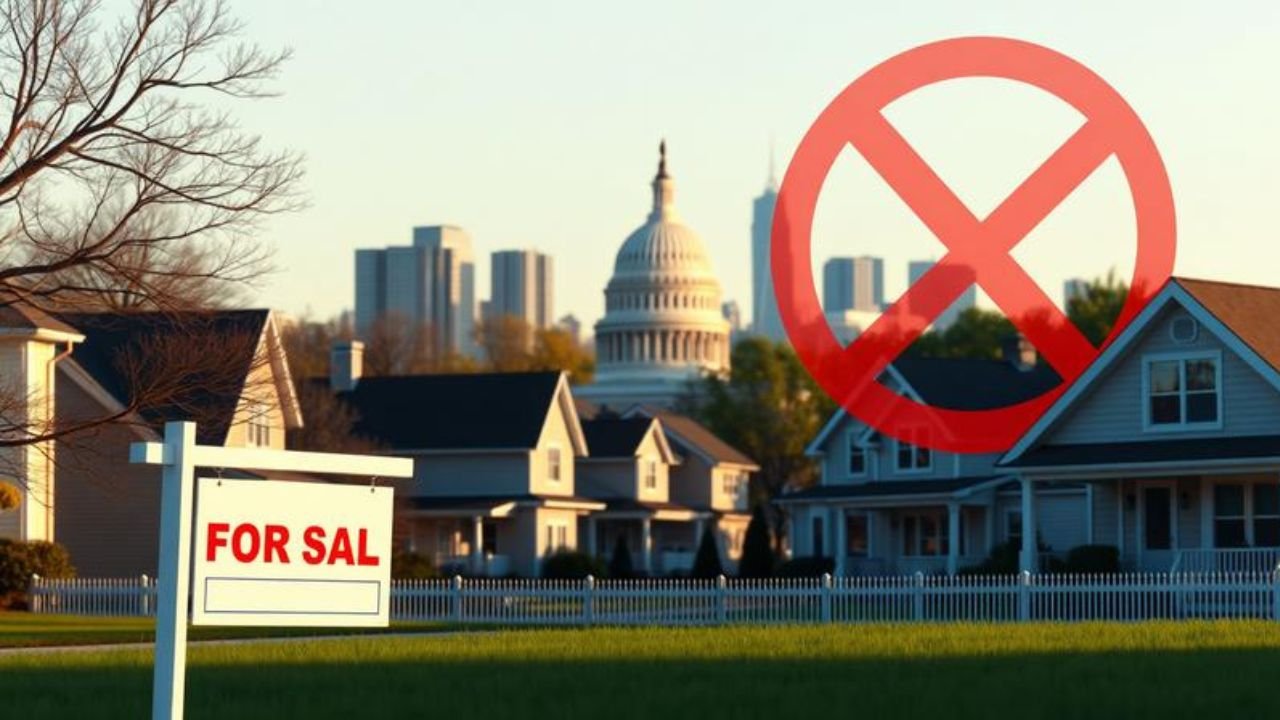
Former President Donald Trump reignited the housing affordability debate this week after posting on social media that he has taken steps to ban large institutional investors from buying additional single-family homes. He added that he will urge Congress to codify the move into law, a proposal that could significantly reshape parts of the U.S. housing market if implemented.
The announcement immediately sparked questions across Wall Street and Main Street alike: Would such a policy actually lower home prices? Could it increase housing supply? And how realistic is it that a social media post becomes enforceable national policy?
To unpack the implications, housing market expert Lance Lambert, CEO and co-founder of ResiClub, offered critical insights into how institutional ownership really works—and why the impact of any ban would vary dramatically by market.
READ ALSO: GBP/USD Forecast for 2026: Central Bank Divergence, Volatility, and Crucial Price Level
How Much of the Housing Market Do Institutional Investors Really Control?
One of the most misunderstood aspects of the housing debate is the actual scale of institutional ownership.
Nationally, institutional investors that own 1,000 or more homes control roughly 0.5% of total U.S. housing stock. If the definition expands to include investors with at least 100 homes, that share rises to about 1%. In many parts of the country, institutional ownership of single-family homes is close to zero.
However, the picture changes significantly when zooming into specific metro areas. Markets such as Atlanta, Charlotte, Austin, Tampa, and Jacksonville have much higher concentrations. In Atlanta, for example, institutional investors owning at least 1,000 homes account for about 4% of all single-family homes. Within the single-family rental segment, that figure jumps to 20–25%, making the city one of the most exposed to any policy targeting large investors.
This uneven distribution is key. Any nationwide ban would not affect all housing markets equally. Instead, it would likely produce localized impacts, with certain Sun Belt metros seeing far more disruption than others.
A Ban on Buying or Forced Selling?
A crucial detail lies in the wording of Trump’s post. He emphasized stopping institutional investors from buying more single-family homes. That language suggests a ban on future acquisitions, not a forced liquidation of existing portfolios.
This distinction matters enormously.
If the policy only prevents new purchases, the immediate impact on housing supply would likely be modest. Prices might cool slightly in high-investor markets, but the broader national housing shortage would remain largely unchanged.
On the other hand, a forced selloff—while not currently indicated—would be a much more aggressive intervention. That scenario could flood certain markets with new listings, temporarily easing prices and rental pressure in investor-heavy cities. However, such a move would almost certainly face legal challenges and intense political opposition.
For now, Lambert notes, there is no clear evidence that a forced selloff is being considered.
Is This Policy Likely to Become Law?
Trump has a history of floating bold housing ideas to gauge public reaction. According to Lambert, this appears to be part of that same playbook.
When Trump previously floated the idea of a 50-year mortgage, public response was overwhelmingly negative. Polling showed a net favorability of minus 50 percentage points, effectively killing the proposal within days.
This time, the response is very different.
Lambert conducted a poll of 1,000 respondents shortly after Trump’s post. The proposal to restrict institutional homebuying received a net favorability of plus 50 percentage points, with broad support across political lines. That level of popularity suggests the idea resonates with voters frustrated by affordability challenges and rising home prices.
While Congressional approval and court challenges remain major hurdles, Lambert believes Trump is unlikely to abandon the concept given its populist appeal and headline-grabbing potential.
Trump’s Mortgage Bond Proposal: Can It Really Lower Rates?
Adding to the housing headlines, Trump also posted that he plans to instruct government representatives to purchase $200 billion in mortgage-backed securities (MBS) through Fannie Mae and Freddie Mac. According to Trump, this move would push mortgage rates lower and improve affordability.
From a market mechanics standpoint, the logic checks out.
Bond prices and yields move inversely. When demand for mortgage-backed securities rises, yields fall—leading to lower mortgage rates. This is precisely what occurred during the pandemic, when the Federal Reserve aggressively purchased MBS to stabilize the housing market.
Importantly, this process may already be underway.
According to Bloomberg estimates, Fannie Mae and Freddie Mac are expected to purchase around $200 billion in mortgage-backed securities this year, doubling their buying pace from late last year. While this amount is relatively small compared to the total MBS market, it does provide incremental downward pressure on mortgage rates.
Why Mortgage Rates Have Already Fallen
Over the past 12 months, the average 30-year fixed mortgage rate has declined from roughly 6.8–6.9% to around 6.1–6.2%. Interestingly, much of this decline has not come from falling Treasury yields, but from a narrowing spread between mortgage rates and the 10-year Treasury.
That spread widened significantly in 2022 after the Federal Reserve stopped buying mortgage-backed securities. Since then, gradual normalization—and renewed GSE buying—has helped compress the spread, easing borrowing costs.
Trump’s proposed MBS purchases could add marginal pressure in the same direction. However, Lambert cautions that the effect would likely be modest unless paired with broader economic changes.
The Bigger Variable: The Economy
While policy actions can influence mortgage rates at the margin, the most powerful driver remains the overall economy.
A meaningful drop in mortgage rates would likely require weaker economic data, particularly a rise in unemployment or a sharper-than-expected slowdown. In that environment, bond yields would fall more aggressively, pulling mortgage rates down with them.
Absent such conditions, most analysts expect mortgage rates to drift lower only gradually, even with government intervention.
What This Means for Homebuyers and Investors
For prospective homebuyers, Trump’s proposals signal a clear political focus on housing affordability, but they do not guarantee immediate relief. A ban on institutional buying could reduce competition in certain markets, especially for entry-level homes, but it would not solve the underlying supply shortage nationwide.
For investors, particularly large-scale operators, the risk profile has changed. Even if a ban is limited to future purchases, uncertainty alone could slow acquisition strategies in high-exposure markets.
Ultimately, the housing market’s trajectory will depend less on social media announcements and more on whether these ideas translate into durable policy—and how the broader economy evolves in the months ahead.
READ ALSO: Gold XAUUSD Price Today | Live Support Resistance & Intraday Analysis
1. What is Trump proposing about institutional investors and housing?
Trump has proposed banning large institutional investors from buying additional single-family homes to improve affordability for individual homebuyers.
2. Will this ban affect home prices across the U.S.?
The impact would vary by region. Markets with high institutional ownership like Atlanta, Austin, and Tampa could see more listings and softer prices.
3. Does the proposal include forcing investors to sell existing homes?
As of now, the proposal appears to focus only on stopping future purchases, not forcing investors to sell homes they already own.

Hi, I am the creator of MrTellMare.com—a passionate Stock Market learner and Technical Analysis enthusiast. My goal is to help traders understand Price Action, Market Structure, and Intraday Strategies in a simple and practical way. I share educational content on Equity, Index, Futures, Commodity and Crypto markets for informational and learning purposes only. I believe trading is a skill, and with the right knowledge and discipline, anyone can grow in financial markets.